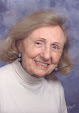
Twenty-years ago on December 31 people began to wonder what will happen when The Digital Transformation begins? Would transactions made in 1999 be honored when banks began to use zeroes to record financial and personal deposits? How would Hospital, Police and Fire Departments operate? People began to store water, food and other necessities in fear that delivery systems would be interrupted. Though the engineering changes had been studied and anticipated many years before, there was a sense of uncertainty that calamity would happen when the great Crystal Ball of New York would ring out the message "Happy New Year 2000!" I believe the same sense of uncertainty and fear is felt now.
To overcome our fear then we sought the advice of honest, reasonable leaders who were not arrogant. We found information easily and accessibly through a free press. As citizens we used technology to help us improve deficiencies and extend opportunities for education. In the next twenty years we will experience more changes. Sometimes we may call upon religious or spiritual faith to ease us through change, but let that faith not question one's loyalty to this country. It is not a single person or ideology that will lead us safely. Not one of us is above the law, it is our heritage. We need to listen more to correct injustice. We need to examine our own behavior. The New Year allows us to be hopeful that America's fairness will be seeded by the kindness we citizens accord each other.
May good health, good weather and common sense be accorded you and yours in 2020.
HAPPY NEW YEAR 2020!
Saturday, December 28, 2019


Monday, December 2, 2019
WORDS AND WIT THAT INSPIRE
I was curious about the article "The Polymath Who Led With His Wit.*"
I had never heard of a polymath. Nor did I know of the writing of Clive James a literary critic until I read his eulogy. At first I thought polymath was about mathematics. In some ways the logic of mathematics combined with the rhythm of music are the things I enjoy most about writing.
James was 80 when he died. I read of his literary accomplishments and of his ability to laugh at himself and illness. He left a legacy of quotes. In one of his final interviews he talks of "The childish urge to understand everything doesn't necessarily fade. If you don't know the exact moment when the lights will go out, you might as well read until they do."
Would that all of us understood that kind of plain, earthy language.
_________________________
*The Polymath Who Led With His Wit
Dwight Garner/ An Appraisal
New York Times, 11-30-19
I had never heard of a polymath. Nor did I know of the writing of Clive James a literary critic until I read his eulogy. At first I thought polymath was about mathematics. In some ways the logic of mathematics combined with the rhythm of music are the things I enjoy most about writing.
James was 80 when he died. I read of his literary accomplishments and of his ability to laugh at himself and illness. He left a legacy of quotes. In one of his final interviews he talks of "The childish urge to understand everything doesn't necessarily fade. If you don't know the exact moment when the lights will go out, you might as well read until they do."
Would that all of us understood that kind of plain, earthy language.
_________________________
*The Polymath Who Led With His Wit
Dwight Garner/ An Appraisal
New York Times, 11-30-19
Wednesday, November 13, 2019
NEW POST NOVEMBER 13
THANKSGIVING 2019
PEACE, SO STRONG OUR DESIRE, SO FRAGILE TO ACHIEVE
OUR TABLE HOLDS FAMILIAR AND NEW DISHES
SURROUNDED BY FAMILY, FRIENDS AND STRANGERS
SURROUNDED BY FAMILY, FRIENDS AND STRANGERS
TELLING STORIES THAT PRESERVE US
AS WE REMEMBER THOSE NOT HERE.
Beverly Rehfeld
from St. Louis, Missouri
Friday, November 8, 2019
THE MEMORIES WE PRESERVE
Last week Don and I visited the August A. Busch Conservation Memorial Park. We were hoping to catch a glimpse of the last of autumn's colors. We did see some earthy colors like ochre-yellow and sturdy green trees, but what I found so beautiful was the nearly 7000 acres of land itself. The land was once owned by farmers and individual private property owners until it was sold by Missouri to Mr. August Busch in 1947. Mr. Busch's wife Alice contributed $70,000 to the Missouri Department of Conservation to preserve the area for public use.
We traveled the narrow but well marked roads around the park. We saw signs of the crop land that may have been in existence at the time the State of Missouri took over and created the nature reserve. We saw some of the 550 acres of lakes and ponds and the remains of farming fields. Once in a while Don spotted a bunker or two used by the United States Army to store TNT and other toxic chemicals years ago. As a result, the area became a part of the Federal Superfund Environmental Program.
Of particular interest to me was the boardwalk over the wetlands. It was not very large, but large enough to provide a small shack through which we observed ducks. Some of the geese flying overhead "honked" loudly as if we had disturbed their area. We searched without success to find frogs or even some small minnows in the weeds. There was a small slick in the weeds which I wondered, could it have been toxic causing the absence of amphibians.
As I left the duck blind which faces East toward the Mississippi River, I thought of the people we had seen fishing and hunting and biking along the way. I wondered too what reaction there may have been by Native Americans who may have spotted strangers about to inhabit their land. Did people object to the Federal Government's takeover of their property because of a "strange law" known as Eminent Domain?
When we left we were refreshed and inspired. The Memorial, through the efforts of Alice Busch to keep alive and preserve this part of Missouri's history, benefits all of us. Being there was a reminder of the power of land and water and of how both can be enhanced or destroyed by humans and nature.
We traveled the narrow but well marked roads around the park. We saw signs of the crop land that may have been in existence at the time the State of Missouri took over and created the nature reserve. We saw some of the 550 acres of lakes and ponds and the remains of farming fields. Once in a while Don spotted a bunker or two used by the United States Army to store TNT and other toxic chemicals years ago. As a result, the area became a part of the Federal Superfund Environmental Program.
Of particular interest to me was the boardwalk over the wetlands. It was not very large, but large enough to provide a small shack through which we observed ducks. Some of the geese flying overhead "honked" loudly as if we had disturbed their area. We searched without success to find frogs or even some small minnows in the weeds. There was a small slick in the weeds which I wondered, could it have been toxic causing the absence of amphibians.
As I left the duck blind which faces East toward the Mississippi River, I thought of the people we had seen fishing and hunting and biking along the way. I wondered too what reaction there may have been by Native Americans who may have spotted strangers about to inhabit their land. Did people object to the Federal Government's takeover of their property because of a "strange law" known as Eminent Domain?
When we left we were refreshed and inspired. The Memorial, through the efforts of Alice Busch to keep alive and preserve this part of Missouri's history, benefits all of us. Being there was a reminder of the power of land and water and of how both can be enhanced or destroyed by humans and nature.
Tuesday, October 29, 2019
A DIFFERENT KIND OF HALLOWEEN
One week before Halloween and one year after the murder of Jews who had been worshipping in a Pittsburgh Synagogue I sat in a simple Chapel in Cincinnati. I was with my son Andrew Rehfeld, his wife Miggie Greenberg, my grandchildren Emma and Hoben and their friends, Julia and Corbyn. We were together to celebrate the Inauguration of Andrew as Presidentof Hebrew Union College - Jewish Institute of Religion etablished in 1875.
We were joined by more family members, colleagues and a delegation of people from St. Louis and from other cities and countries around the world. My older son Edward was in Australia working with the Laborers' International Union of North America on a conference. He was able to stream the Inauguration proceedings by computer.*
The Inauguration lasted three days during which time we observed the rituals so familiar to the Jewish people. We broke bread with strangers. We listened to familiar music sung in Cantorial style played on new and ancient instruments. We danced. We studied Torah with students, rabbis and other learned men and women. We ate, and we remembered those people of all ages and beliefs no longer here.
We went by bus from the College Campus, to visit and enjoy the hospitality of three different Temples. We visited the National Underground Railroad Freedom Center and the historic Plum Street Temple where the inauguration of Andrew Rehfeld Ph.D. as the tenth President of the Hebrew Union College took place.
Even after Mother Nature poured drenching rain on the proceedings, when the rain abated I felt as if we had been reminded of our heritage to seek justice and law to overcome hatred and fear of others,
and I thought how grateful I was to have been a part of it all.
_________________________
*Hebrew Union College-Jewish Institute
HUCmoji huc.edu/HUCmoji
We were joined by more family members, colleagues and a delegation of people from St. Louis and from other cities and countries around the world. My older son Edward was in Australia working with the Laborers' International Union of North America on a conference. He was able to stream the Inauguration proceedings by computer.*
The Inauguration lasted three days during which time we observed the rituals so familiar to the Jewish people. We broke bread with strangers. We listened to familiar music sung in Cantorial style played on new and ancient instruments. We danced. We studied Torah with students, rabbis and other learned men and women. We ate, and we remembered those people of all ages and beliefs no longer here.
We went by bus from the College Campus, to visit and enjoy the hospitality of three different Temples. We visited the National Underground Railroad Freedom Center and the historic Plum Street Temple where the inauguration of Andrew Rehfeld Ph.D. as the tenth President of the Hebrew Union College took place.
Even after Mother Nature poured drenching rain on the proceedings, when the rain abated I felt as if we had been reminded of our heritage to seek justice and law to overcome hatred and fear of others,
and I thought how grateful I was to have been a part of it all.
_________________________
*Hebrew Union College-Jewish Institute
HUCmoji huc.edu/HUCmoji
Saturday, October 12, 2019
AUTUMN'S PROMISE & REMEMBRANCE
Right in the middle of political frenzy and religious remembrance comes Autumn. It brings holiday observance for those of faith as well a sense of awe for the impact custom and nature can have.
Suddenly roads and fields are dry. Clouds that seemed to be permanently fixed above us are gone. The drenching rain gives way to a fine and billowing mist. The sky becomes crystal clear and temperatures drop. Trees and shrubs show their color and reveal the hiding places of small creatures.
We know Autumn will give way to Winter too soon but we delight in this season as it is. We promise ourselves to enjoy the crunch of leaves under foot before we need to deal with snow and ice.
Suddenly roads and fields are dry. Clouds that seemed to be permanently fixed above us are gone. The drenching rain gives way to a fine and billowing mist. The sky becomes crystal clear and temperatures drop. Trees and shrubs show their color and reveal the hiding places of small creatures.
We know Autumn will give way to Winter too soon but we delight in this season as it is. We promise ourselves to enjoy the crunch of leaves under foot before we need to deal with snow and ice.
Monday, September 16, 2019
"BROTHER CAN YOU SPARE A DIME?"
BROTHER CAN YOU SPARE A DIME?*
We elected a man
who told us
all things
would be better
and he could do it alone.
BROTHER CAN YOU SPARE A DIME?
He wore a red cap
and used a helicopter
and fleet of cars
to wherever he went
and there was great excitement.
BROTHER CAN YOU SPARE A DIME?
Before he came
we worked hard
on our jobs
and loved our land.
BROTHER CAN YOU SPARE A DIME?
We helped keep
our waters clean
our skies free of pollution
our wetlands free of development
and our streets and roads
trash free.
BROTHER CAN YOU SPARE A DIME?
We worked
side by side
with all people
studied with all children
cared for those with disabilities
and tried to reverse long-held injustices
even when he told us some of us were unworthy
he refused to tell us his worth.
BROTHER CAN YOU SPARE A DIME?
We survived
floods, storms and intolerance
and he came to console us
but took away the laws
that would have helped us.
BROTHER CAN YOU SPARE A DIME?
He shows affection
for people, children and families
murdered by guns
but will not encourage Congressional
Representatives to sign laws
to reduce and register
the number of weapons
available in states and the nation.
BROTHER CAN YOU SPARE A DIME?
Now our children, parents and grandparents
sing out in a chorus of anguish
he "tweets" his reply
he leaves a trail of
state, national and international documents
that took years of study, planning and negotiations
he claims to have no merit and wipes them away.
For all this
BROTHER CAN YOU SPARE A DIME?
_____________________________
"BROTHER CAN YOU SPARE A DIME?"
Was a song of World War II written in 1930
it asked why have we squandered our nation?
With apology to Lyricist E.Y."YIP" Harburg
and Composer Jay Gormey.
We elected a man
who told us
all things
would be better
and he could do it alone.
BROTHER CAN YOU SPARE A DIME?
He wore a red cap
and used a helicopter
and fleet of cars
to wherever he went
and there was great excitement.
BROTHER CAN YOU SPARE A DIME?
Before he came
we worked hard
on our jobs
and loved our land.
BROTHER CAN YOU SPARE A DIME?
We helped keep
our waters clean
our skies free of pollution
our wetlands free of development
and our streets and roads
trash free.
BROTHER CAN YOU SPARE A DIME?
We worked
side by side
with all people
studied with all children
cared for those with disabilities
and tried to reverse long-held injustices
even when he told us some of us were unworthy
he refused to tell us his worth.
BROTHER CAN YOU SPARE A DIME?
We survived
floods, storms and intolerance
and he came to console us
but took away the laws
that would have helped us.
BROTHER CAN YOU SPARE A DIME?
He shows affection
for people, children and families
murdered by guns
but will not encourage Congressional
Representatives to sign laws
to reduce and register
the number of weapons
available in states and the nation.
BROTHER CAN YOU SPARE A DIME?
Now our children, parents and grandparents
sing out in a chorus of anguish
he "tweets" his reply
he leaves a trail of
state, national and international documents
that took years of study, planning and negotiations
he claims to have no merit and wipes them away.
For all this
BROTHER CAN YOU SPARE A DIME?
_____________________________
"BROTHER CAN YOU SPARE A DIME?"
Was a song of World War II written in 1930
it asked why have we squandered our nation?
With apology to Lyricist E.Y."YIP" Harburg
and Composer Jay Gormey.
Subscribe to:
Posts
(
Atom
)